Practice I · Financial investigationsBusiness fraud & financial investigations.
Independent examination of business records when money, assets or reported results are in dispute: tracing transactions across accounts and entities, reconstructing what happened and documenting it for counsel, owners and boards.
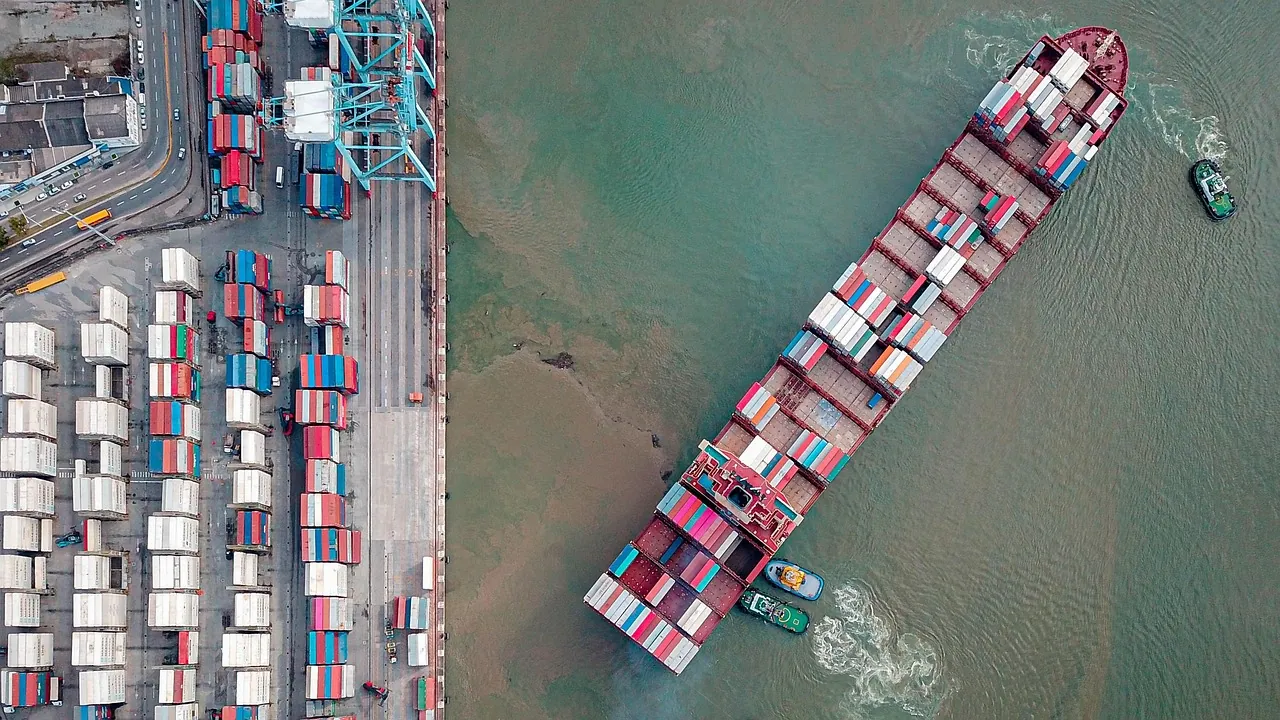 Exh. I · Cross-border flows
- Engaged by
- Attorneys
- Business owners
- Boards and investors
- Parties to acquisitions
The questions behind the work.
An investigation is framed by the questions it must answer. These are the ones business disputes most often turn on.
- Q.A
Where did the money go, and through which accounts and entities?
Transfers are followed from source to destination across every account the records reach.
- Q.B
Were revenue, inventory or asset values reported accurately?
Reported figures are tested against the underlying sales, purchase and inventory records.
- Q.C
Who owned, controlled or benefited from the transactions?
Corporate records and signatories are connected to the movement of funds.
- Q.D
What was the source of these funds, and how were they used?
Receipts and disbursements are reconstructed into a source-and-use schedule.
- Q.E
Do the books support the claim being made?
Each figure in a disputed claim is traced back to a record, or shown to have none.
Records examined.
Findings are only as strong as the records behind them. Each engagement identifies which records exist, which must be obtained and what each can establish.
| Record | What it can establish |
|---|---|
| Bank and brokerage statements | Flow of funds, timing and counterparties |
| Wire and cross-border transfer records | Movement between jurisdictions and entities |
| General ledger and journals | How transactions were recorded and later adjusted |
| Invoices, contracts and purchase records | Whether recorded activity matches commercial terms |
| Corporate filings and ownership records | Structure, control and related parties |
| Inventory counts and asset registers | Existence and valuation of reported assets |

From records to findings.
Four working stages. Not every engagement needs all four; the scope agreed at the start decides which apply.
- Stage 1 of 4
Trace
Funds are followed through accounts, transfers and entities, in date order, from the records rather than from assumptions.
OutputTransaction tracing schedules
- Stage 2 of 4
Reconstruct
Where records are incomplete or altered, the financial history is rebuilt from independent sources such as bank and third-party records.
OutputReconstructed accounts and timelines
- Stage 3 of 4
Test
Reported revenue, inventory, valuations and claims are tested against the underlying documents and against each other.
OutputVariance and exception analyses
- Stage 4 of 4
Report
Findings are written with the records relied upon, the method used and the limitations of the analysis.
OutputWritten findings and exhibits
Matters of this kind.
Drawn from the practice’s exemplar cases. Details are generalized to protect client confidentiality.
Acquisition due diligence
Forensic review of sales records, inventory sampling and risk assessment for a U.S. retail acquisition, focused on revenue recognition and inventory.
Due diligence
Bank contract dispute
Examination of asset liquidation, intellectual property assignments and fiduciary conflicts of interest, with forensic document analysis.
Fraud examination
Real estate partnership
Partnership agreement analysis, valuation of capital accounts and earnings tracing in a breach-of-contract matter.
Valuation and tracing
Every matter differs; past work does not predict the result of another engagement.
All exemplar casesCommon questions.
About scope, records and timing. Anything specific to a matter is best raised in the first conversation.
Depending on the agreed scope: documented findings, transaction tracing schedules, reconstructed accounts, a written report and supporting exhibits. Testimony is available where the engagement calls for it.
Yes, as far as the records allow. Cross-border tracing depends on which bank, transfer and corporate records are available or can be obtained, often through counsel and the discovery process.
Yes. Pre-acquisition due diligence uses the same examination of revenue, inventory and records to test whether reported results are supported before a deal closes.
Simple matters may conclude within days or weeks. Complex schemes involving multiple parties or international components can take several months or longer. The timeline is discussed when the scope is set.